

Signing a Maryland purchase agreement feels less permanent than it is. A seller signs on a Tuesday, gets a stronger offer on Thursday, then calls me Friday asking how to back out of the whole thing. A clean way out exists sometimes. More often it doesn’t, and the cost of guessing wrong lands squarely on the seller.
When Can a Maryland Seller Walk Away From a Signed Deal?
“Am I stuck?” That’s the first thing a seller asks me, and it deserves a straight answer rather than a lecture on contract theory. Once both parties sign and the terms are ratified, you’ve got a binding contract with real obligations attached to your property.
No cooling-off window protects a seller here the way some consumer sales come with one. Your way out, if you have one, lives inside the four corners of the contract you signed.
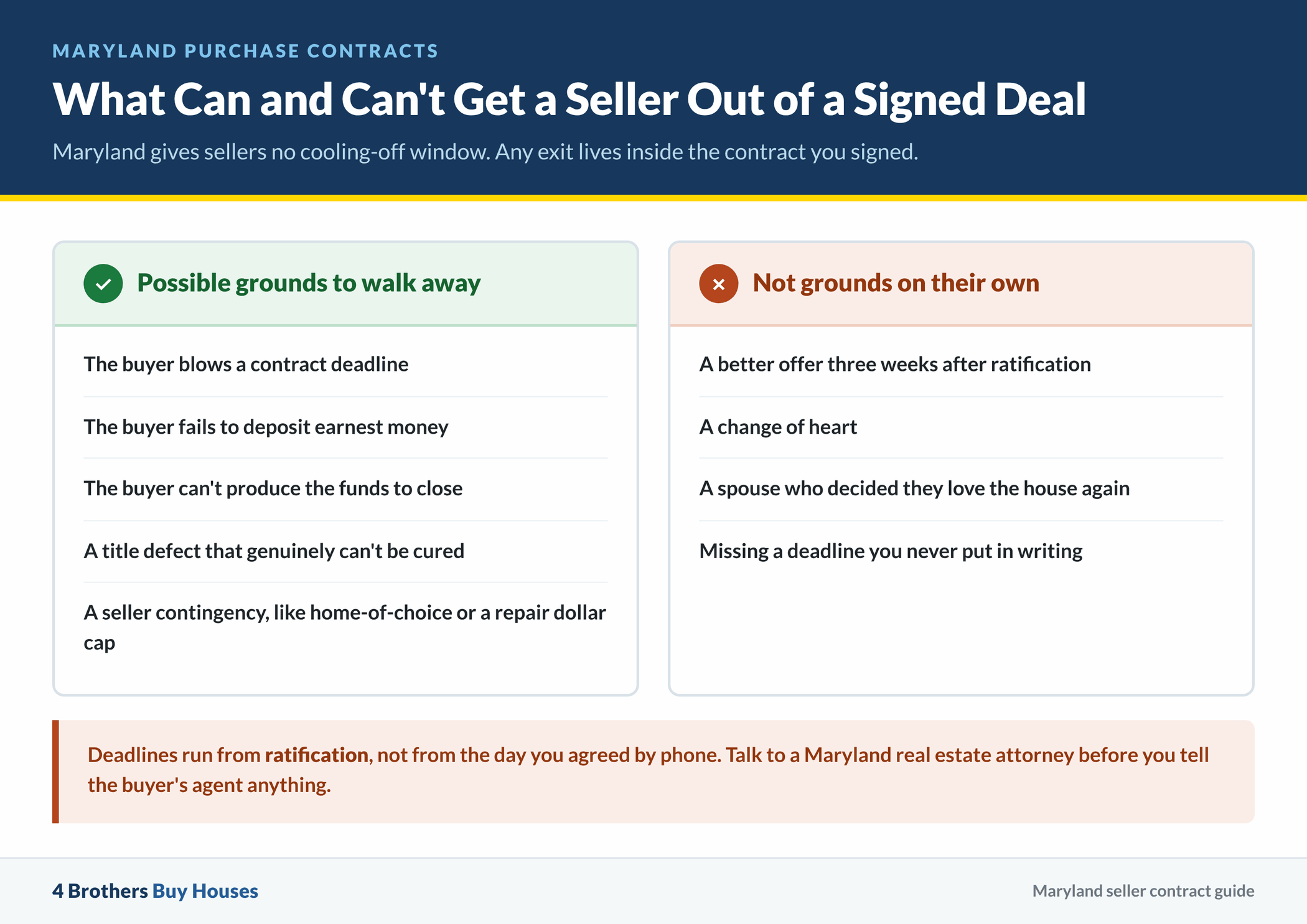
Contingencies are where those exits usually sit. Most are written for the buyer’s benefit: financing, inspection, appraisal. Your own escape hatches are narrower, like a home-of-choice contingency or a clause that voids the contract if a required repair exceeds a stated dollar cap.
A seller can also negotiate a kick-out clause when the buyer’s offer depends on selling their own home first. It lets you keep marketing the house. If a second offer arrives, the buyer gets a short window to drop that contingency or release the contract.
The cleanest exit of all is a mutual release. If the buyer agrees to let you back out, both sides sign a release, the deposit gets settled in writing, and nobody goes to court. A buyer has little reason to sign one for free, so the seller usually has to offer something, like covering the buyer’s inspection and appraisal costs.
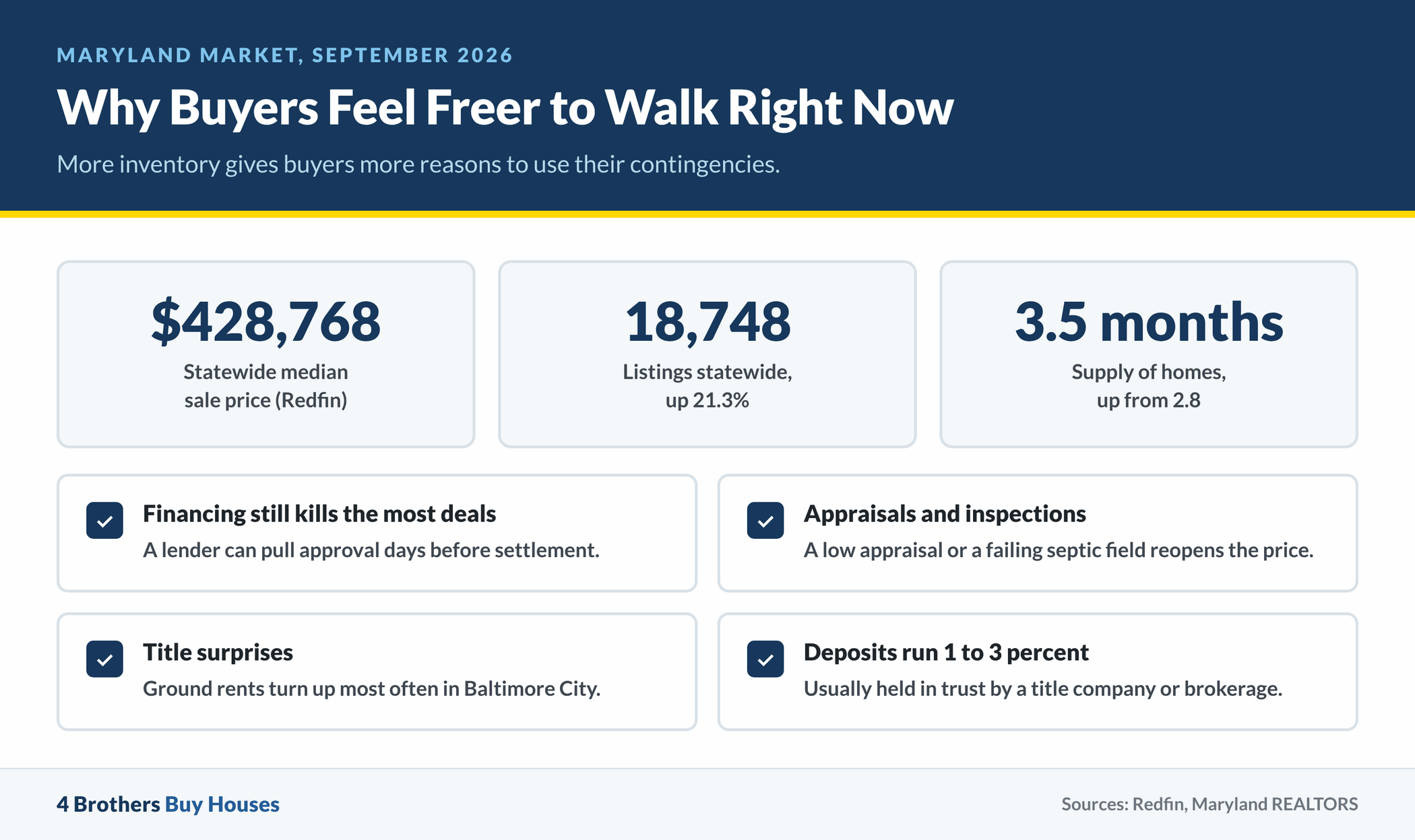
Market pressure makes owners itchy. Maryland’s median sale price sat at $428,768 in September 2026, barely up from a year earlier, according to Redfin’s statewide tracking, with homes taking a median of 45 days to sell. In a market that flat, a surprise over-asking offer three weeks after ratification is tempting. Breaking the contract over it without legal grounds is how a seller ends up in litigation instead of at settlement.
Why Do Maryland Real Estate Deals Fall Through?
A Severna Park seller had a ratified contract, movers booked, and a rental lined up in North Carolina. Eleven days before settlement, the buyer’s lender pulled the loan approval over a job change nobody disclosed.
Financing collapse is still the most common reason a contract in Maryland dies. An appraisal lands below the sale price, or inspections turn up a cracked heat exchanger or a failing septic field on the Eastern Shore. Title searches surface a ground rent the seller never knew about, which happens more in Baltimore City than anywhere else in the state.
Inventory doesn’t just sit still when conditions cool off. Statewide inventory climbed 21.3% in September 2026 to 18,748 listings, and months of supply rose from 2.8 to 3.5, per Maryland Realtors data reported that month. More options mean buyers feel freer to use contract contingencies over things they’d have overlooked two years ago.
Notice who walks away in most of those stories. It’s the buyer, using an exit the contract handed them. A seller rarely gets the same menu, so the question of whether you can back out deserves a careful read before anyone acts.
A couple of years ago I bought a small brick rancher in Dundalk from a retired couple who’d inherited the place and never wanted to be landlords. Their third tenant had stopped paying in February, the garage still held the previous tenant’s broken dryer, and they told me on a Saturday morning they were done chasing rent checks. We closed without a listing, a lockbox, or a single showing.
Can a Seller Back Out of a Real Estate Contract in Maryland?
Which brings us to the harder version of the question. It isn’t whether you can refuse to show up at settlement. It’s what that refusal costs a seller. Walking away isn’t impossible, just expensive.
A few things can give a seller real grounds to back out. If the buyer blows a deadline, fails to deposit earnest money, or can’t produce funds, the buyer has breached the contract and you may be released. A title defect you genuinely can’t cure can also end the sale. Your settlement agent spots those problems before closing.
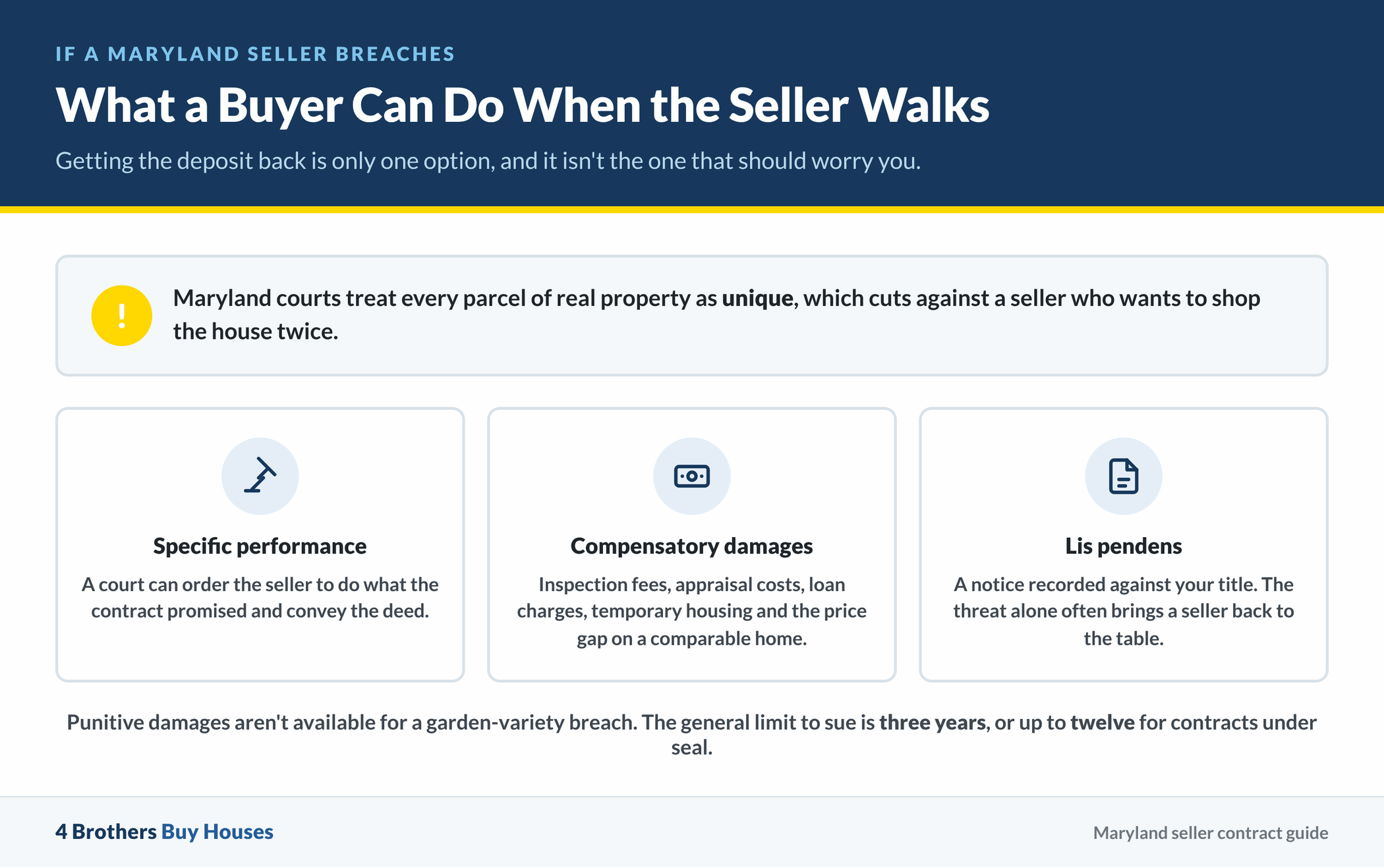
What doesn’t work: a better offer, a change of heart, or a spouse who decided they love the house again. Courts in Maryland treat real property as unique, and that principle cuts against a seller who wants to shop the house twice.
One more point surprises people. Maryland’s disclosure law does create a way to cancel, but it belongs to the buyer. If the seller didn’t deliver the disclosure or disclaimer form before the contract was signed, the buyer can rescind in writing within 5 days of receiving it, under Real Property § 10-702. Homeowners association resale disclosures carry a similar buyer cancellation right. Nothing gives you a matching right in either case.
A seller handling estate situations faces a different wrinkle. A personal representative may need court authorization before conveying, and heirs who all hold title must all sign. Missing signatures can make the contract unenforceable from the start, which isn’t the same as backing out of a valid one.
As a seller, talk to a real estate attorney before you announce anything to the buyer’s agent. A lawyer reading your actual contract will tell you in twenty minutes what a blog post can’t.
What Contract Deadlines Matter Most in Maryland Real Estate Sales?
Every deadline in a purchase contract in Maryland runs from ratification, not from the date you first accepted verbally over the phone. That gap trips people up. A seller who agreed on Monday and signed Wednesday is working off Wednesday.
Inspection periods in a typical contract are short and unforgiving. Financing and appraisal windows run longer. Each one has its own date, and when a deadline passes without written notice, the contingency generally falls away and the agreement hardens in the buyer’s favor.
Does your contract say time is of the essence? That single phrase changes how a court views a missed settlement date, and many a seller never reads far enough into the paperwork to know.
Contract extensions are normal. Buyers ask for them constantly, especially when an underwriter wants one more document. As the seller, you’re not obligated to grant one. Refusing a reasonable two-day extension to spite a buyer rarely works out well, and it can make you look like the party hunting for a reason to back out.
Baltimore County single-family homes that sold in September 2026 went under contract fast, in a median of 13 days at about 103% of list price, based on county sales data drawn from RPR. Fast markets compress every deadline. A seller who needs breathing room should negotiate for it up front instead of hoping for mercy later.
Build a simple calendar of every contract date on the day you ratify. Put the inspection deadline, the financing deadline, the appraisal deadline and settlement on it. A seller who tracks those dates can spot a buyer default the moment it happens, and that’s one of the few legitimate ways out.
What Happens to the Earnest Money Deposit in Maryland?
The deposit isn’t yours to spend, and it isn’t the buyer’s either, not until somebody says so in writing. Under Maryland law, it’s treated as trust money held for both the buyer and the seller, usually by a title company or the listing brokerage.
A release usually needs signatures from both sides. When a buyer walks and the seller refuses to sign one, the money stays frozen for weeks, sometimes months. The two parties argue over who defaulted, and the escrow holder won’t pick a winner.
Deposits in Maryland commonly run a small slice of the contract price, often between one and three percent. In Montgomery County, the median price reached $610,000 for the three months ending September 2026, as Redfin reported for that county. Even a modest percentage of that is a serious pile of money to have frozen. I’ve seen owners lose sleep over far less.
One pattern I keep seeing: a seller treats the earnest money deposit as a consolation prize, assuming it’ll cover any losses, and it usually falls short. Carrying costs, a second round of marketing, and a lower eventual sale price add up past whatever sits in escrow.
Flip it around, too. If the seller is the one trying to back out, the buyer will want the deposit returned and then some. Refusing to release their money won’t improve your position with a judge.
What Legal Remedies Do Buyers Have When a Maryland Seller Breaches?
For a long time I assumed a jilted buyer just took their deposit back and moved on to the next house.
That’s one option. It isn’t the only one, and it isn’t the one that should worry a seller thinking about a walk-away.
Specific performance is the remedy that gets real estate attorneys’ attention. A court can order a breaching seller to do exactly what the contract promised, which here means conveying the deed. Judges grant this relief because each parcel is considered unique, so money may not make the buyer whole. They also weigh feasibility before ordering anyone to perform.
Compensatory damages are the other path. When a seller breaches a contract in Maryland, the buyer can recover direct losses and, in some cases, foreseeable consequential losses, though punitive damages aren’t available for a garden-variety breach. From contracts I’ve seen go sideways, a buyer might claim inspection fees, appraisal costs, loan application charges, temporary housing, and the price gap between your house and a comparable one.
Plenty of contract disputes settle before a suit is filed. The threat alone, plus the lis pendens a buyer’s lawyer can record against your title, usually brings a seller back to the table. Maryland attorneys who handle these cases stress that no remedy is automatic. Outcomes turn on contract language and on whether the party seeking relief met their own obligations.
That lis pendens deserves a second look before a seller tries to back out. It’s a public notice that a contract lawsuit involves the property. While it sits on the record, title companies are generally reluctant to insure a sale to anyone else, so the seller who walked for a better offer often can’t close that one either.
How Do Real Estate Agents and Commissions Factor Into a Maryland Deal?
A seller in Takoma Park once told me she’d canceled her contract and figured she was free and clear. Her listing agreement said otherwise, and her broker had a claim for the commission even though no settlement ever happened.
Your listing agreement is a separate contract from the purchase agreement. Many provide that commission is earned when the agent produces a ready, willing and able buyer on your terms. Back out of the sale yourself and you may owe the fee anyway, on top of whatever the buyer seeks.
Brokers also hold earnest money in many Maryland transactions, which puts them in an awkward spot when the buyer and seller start fighting. Escrow rules tie their hands.
Have you read your listing contract since the day you signed it? The average seller hasn’t. The cancellation terms usually sit on page two or three, written plainly enough to understand without a lawyer.
Selling direct removes that layer entirely. When a seller works with a buyer like 4 Brothers Buy Houses, there’s no listing contract, no commission math, and no third party with a financial stake in whether the sale survives.
Can a Broken Maryland Home Sale Still Be Saved?
Most dead contracts weren’t dead. They were mispriced, under-communicated, or waiting on a repair nobody wanted to pay for.
Renegotiation saves more contracts than litigation does. A seller credit at closing beats a lawsuit for both sides. When a buyer’s financing wobbles, a short extension or a rate-buydown concession often gets everyone to the settlement table. When an inspection report reads like a horror novel, splitting the difference on the big-ticket items keeps the contract alive more often than walking away does.
Timing matters too. Every contract runs on deadlines, and one that passes without a written extension can hand the other side an exit they didn’t even want. If a seller needs another week for a lender, a contractor or a probate order, ask for it in writing before the date hits.
The other fix is structural. Some houses simply can’t survive a financed buyer’s inspection and appraisal gauntlet. Nothing is hidden. The roof is twenty-five years old, the knob-and-tube wiring is original, or the basement takes water every spring. Those homes break one conventional contract after another. Selling as-is to a cash buyer skips the appraisal, skips the lender conditions, and shortens the window where a sale can fall apart.
Before a seller tries to back out of a shaky contract, it’s worth asking what the alternative looks like. Relisting means new showings, a new buyer and a new set of contingencies. Sometimes the better move is fixing the contract you already have.
Frequently Asked Questions
How long does a buyer have to sue me after a contract collapses?
The general statute of limitations for breach of a written contract in Maryland is three years from the date of the breach. Sealed language can stretch that to twelve years, and plenty of purchase agreements include it.
Can I keep the earnest money if the buyer just changes their mind?
Often yes, but not automatically. If the buyer walked outside a contingency and the contract names the deposit as liquidated damages, the seller has a strong position. You still need the buyer’s written release or a court order before the escrow holder can pay you.
Can a seller back out while the buyer’s contingencies are still open?
Not just because the buyer still has an exit. Contingencies give the buyer options. They don’t give you any. You stay bound unless your contract includes a seller contingency or the buyer defaults.
What happens to my mortgage payoff if settlement is canceled?
Nothing changes for the seller. You remain responsible for the loan, the taxes and the insurance until a sale actually closes. A seller who already moved out and bought elsewhere feels this one hardest.
Does a failed sale have to be disclosed to the next buyer?
The failed contract itself isn’t a disclosure item, but anything the seller learned along the way is. An inspection that revealed a cracked heat exchanger or active termites becomes a known material defect you have to report.
Will my house be stigmatized if it goes back on the market?
Days on market reset, and some agents will ask the seller why the first contract died. A clear, honest answer usually settles it. Buyers care far more about the reason than the fact.
If your sale just came apart and you’re tired of guessing what happens next, it may help to talk through the options with someone who buys houses in this state every week. No listing, no repairs, no pressure to decide anything today.
Where We Buy Houses in Maryland
The 4 Brothers Buy Houses team buys homes across the state, including houses whose first contract fell apart. We buy houses in Baltimore, Silver Spring and Annapolis, plus the rest of the towns on our Maryland page.
Buyers aren’t in a hurry right now. Redfin counted 5,467 Maryland home sales in August 2026, and the typical house spent 43 days on the market before it went under contract.
Talk to Us Before You Walk Away From a Contract
If your sale is wobbling or already dead, you can contact us and get a straight cash number to weigh against your options. You’ll see how our process works first, with no listing agreement and no commission. Fill out the short form below and we’ll call you back.
Helpful Maryland Blog Articles
- Selling Partial Ownership Of A House In Maryland
- Tenant Damage vs. Normal Wear And Tear In Maryland Rental Properties
- Who Pays For Appraisal And Inspection In Maryland
- How To Successfully Sell Your House At Auction In Maryland
- Can An Executor Sell Property In Maryland
- Can A Seller Legally Back Out Of A Real Estate Contract In Maryland?
- Selling Your Maryland Home With An Incarcerated Spouse
- Can You Sell a House With Water Damage in Maryland
- How to Sell a House in Foreclosure in Maryland
- Selling a house in probate in Maryland
- How to Sell an Inherited House in Maryland
- Selling A House With Unpermitted Work In Maryland
- When Is the Best Time to Sell a House in Maryland