

A hoarder house doesn’t look like the TV version. Most of the ones I walk through have a clear path from the front door to the recliner and a kitchen nobody’s cooked in since the second Bush administration. Out in the driveway, there’s usually a family deciding who calls the dumpster company. The clutter isn’t the hard part. Deciding is.
If you’re holding the keys to a hoarder house, you’ve got more options than the three you’ve probably heard about.
What Is a Hoarder House?
Nobody wants to use the word hoarder about their mom. I get it. Hoarding disorder is a recognized mental health condition, not a character flaw or a housekeeping failure.
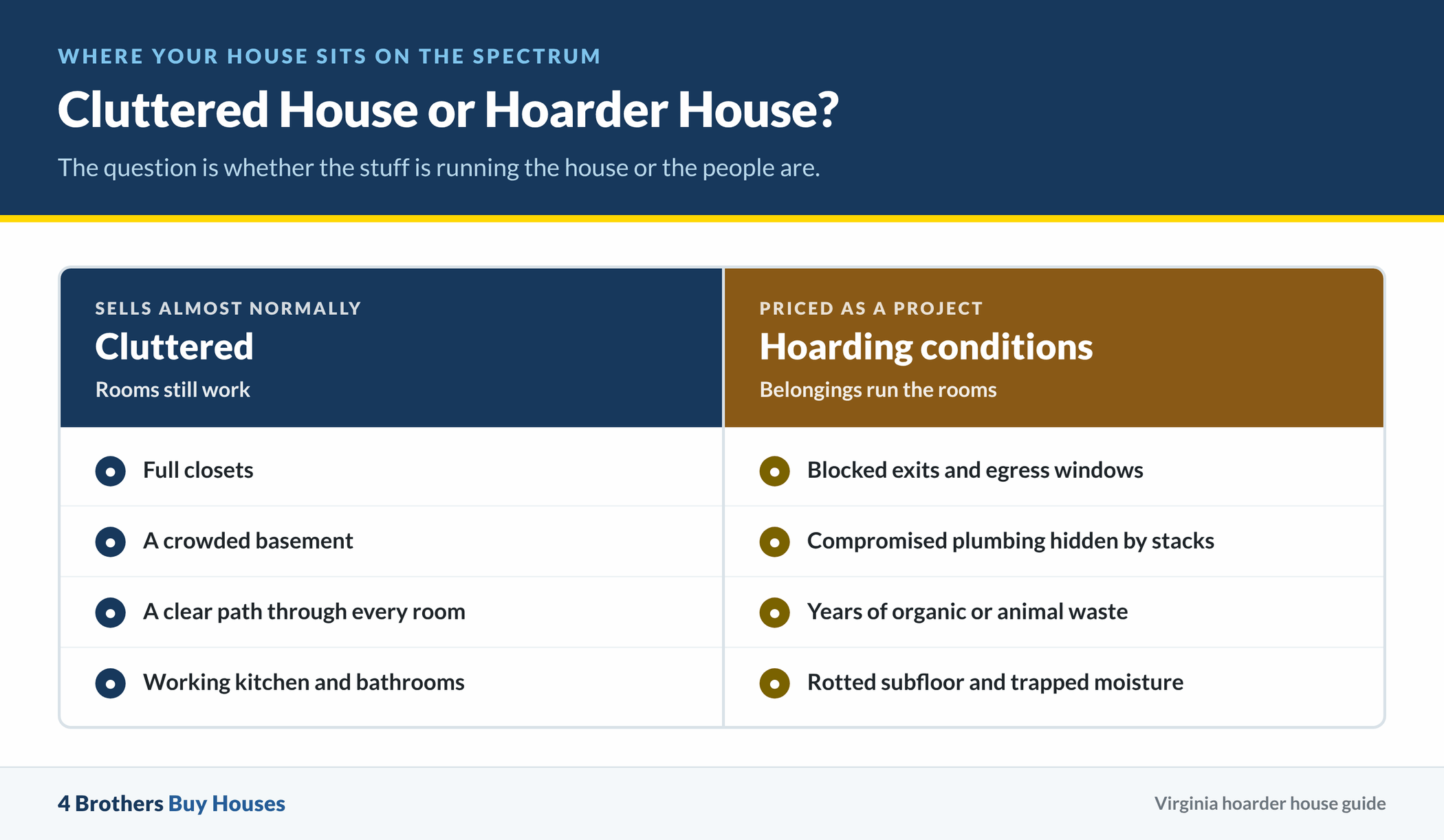
A hoarder house is one where belongings have taken over what the rooms are for. You can’t sleep in the bedroom, the tub holds boxes, and the garage hasn’t fit a car in a decade. Paper stacks block the hallway and the stove sits under grocery bags. Clinicians describe it as persistent trouble parting with possessions no matter what they’re worth.
That spectrum matters for your sale. A cluttered house with full closets sells almost normally. A hoarder house with blocked exits, broken plumbing and years of organic waste sits in a different category, and buyers price it that way.
Some time back I bought a brick rancher in Chesterfield from two adult children whose father had just moved into assisted living. They’d found his Korean War discharge papers in a cereal box on a Tuesday afternoon. That one discovery cost them three weeks of second-guessing everything else in the boxes. The garage held forty-some years of fishing gear on its own.
The real test is whether the stuff is running the house or the people are. Once you see it that way, the question shifts from “how bad is this” to “what’s the fastest honest way out.”
How Big Is the Hoarding Problem in Virginia?
Roughly one in forty adults meets the clinical threshold for hoarding disorder, according to a meta-analysis of eleven population studies summarized by Psychology Today. Across the state’s adult population, that’s well over a hundred thousand households, from Virginia Beach to Winchester.
Older owners carry a bigger share, and plenty of them have lived in the same house since the seventies. Think retired federal workers in Fairfax County, shipyard families in Newport News and farm families in the Shenandoah Valley whose barns have been filling for three generations. Any one of those places can turn into a hoarder house slowly enough that nobody notices.
The market shapes what happens next. The statewide median sale price held at $420,000 in September 2026, per the Virginia Association of REALTORS report, even as active listings climbed more than twenty percent. More inventory makes buyers choosy. A clean colonial in Midlothian and a hoarder house on the same street don’t compete for the same shopper anymore.
Northern Virginia runs on its own numbers. The median sold price there reached $744,950 in September 2026, according to NVAR. High values cut both ways for a hoarder property. The land is worth real money, but the gap between what the house could be and what it is grows wider.
What Are the Dangers of a Hoarder Home?
A seller in Portsmouth sent me photos of a kitchen floor that looked merely crowded. Under four feet of bagged clothing, the subfloor had rotted through from a slow supply-line leak.
That’s the pattern in almost every hoarder home. Clutter hides expensive problems and creates new ones. Stacked material traps moisture against drywall, and mold follows quickly in our humidity, especially in Hampton Roads.
Fire risk climbs too. Blocked doorways turn a small kitchen fire into a total loss, and firefighters won’t enter a house they can’t move through. Rodents and insects bring their own contamination. Animal waste soaks into subflooring and has to be torn out, not cleaned.
Then there’s the air. Dust, spores and decomposing paper make long hours inside a hoarder house genuinely unhealthy. I’ve watched family members start a cleanout in shorts on a Saturday morning and quit by noon with headaches.
Get someone qualified to walk it before you plan anything. That means a home inspector or a contractor who’ll separate structural from cosmetic, not a cleaning company selling a package. A vacant, overgrown house can also draw neighbor complaints and code enforcement, which starts a clock you didn’t choose.
Can a Hoarder House Be Condemned in Virginia?
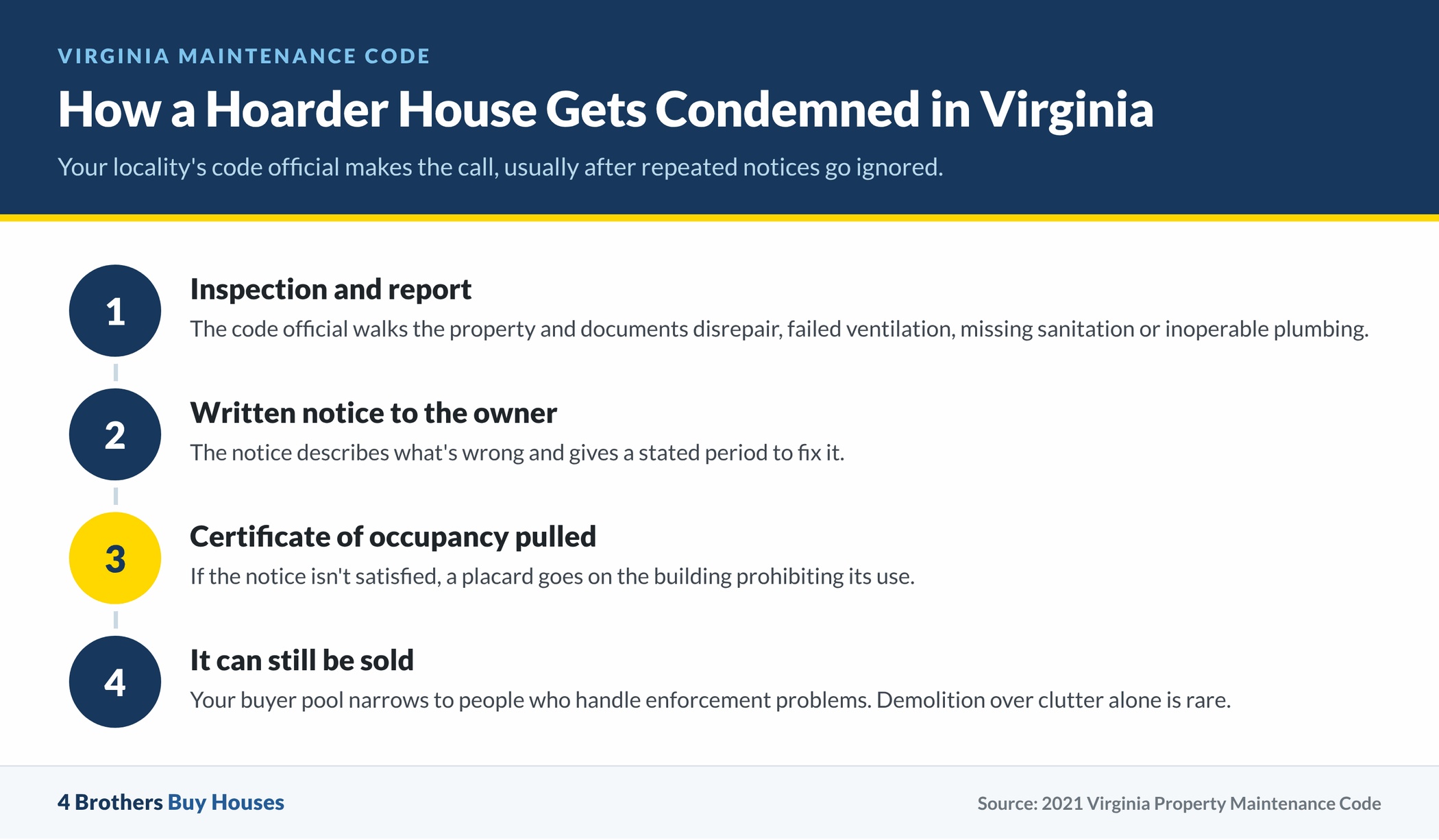
Yes, though usually only after repeated notices go ignored.
The state enforces conditions through the Virginia Maintenance Code, part of the Uniform Statewide Building Code. Your local code official makes the call, not the police or the health department. Under the 2021 Virginia Property Maintenance Code published by DHCD, a structure can be labeled unsafe or unfit for human occupancy when it endangers occupants or the public. Disrepair, failed ventilation or broken plumbing can all qualify, and a hoarder house can produce every one.
Enforcement starts with an inspection and a written notice giving the owner time to fix things. If nothing changes, the official can have the certificate of occupancy pulled and a placard posted. Timeframes vary by locality, so call your building department before assuming the worst.
Demolition over clutter alone is rare. Inspectors usually condemn a house over structural failure or sanitation collapse, not the volume of belongings. A placarded hoarder property can still be sold, though your buyer pool shrinks to people who handle that kind of problem.
What Challenges Come with Selling a Hoarder House?
Families usually picture one weekend with a dumpster and a listing by month’s end. Six weekends later, the second bedroom still hasn’t been touched, because every box needs a decision from someone who isn’t there. Every hoarder cleanout I’ve watched took longer than the family planned.
Showings are their own problem. Traditional buyers walk through a hoarder house and see a project they can’t price, so they skip it or write a low offer with an inspection contingency. An FHA or VA appraisal on a house without a working kitchen usually won’t clear.
Disclosure works differently here. Under the Virginia Residential Property Disclosure Act, you deliver the Real Estate Board’s standard statement, which tells buyers to do their own homework. It doesn’t let you hide anything, and as-is language won’t cover outright fraud.
Insurers get nervous about a vacant house in poor shape, and a lapsed policy mid-sale creates a scramble nobody needs. Call the carrier as soon as it goes empty. Hoarder cleanout by the truckload adds up fast too, and biohazard cleanup costs more than standard hauling.
Should You Fix Up or Sell a Hoarder House As-is?
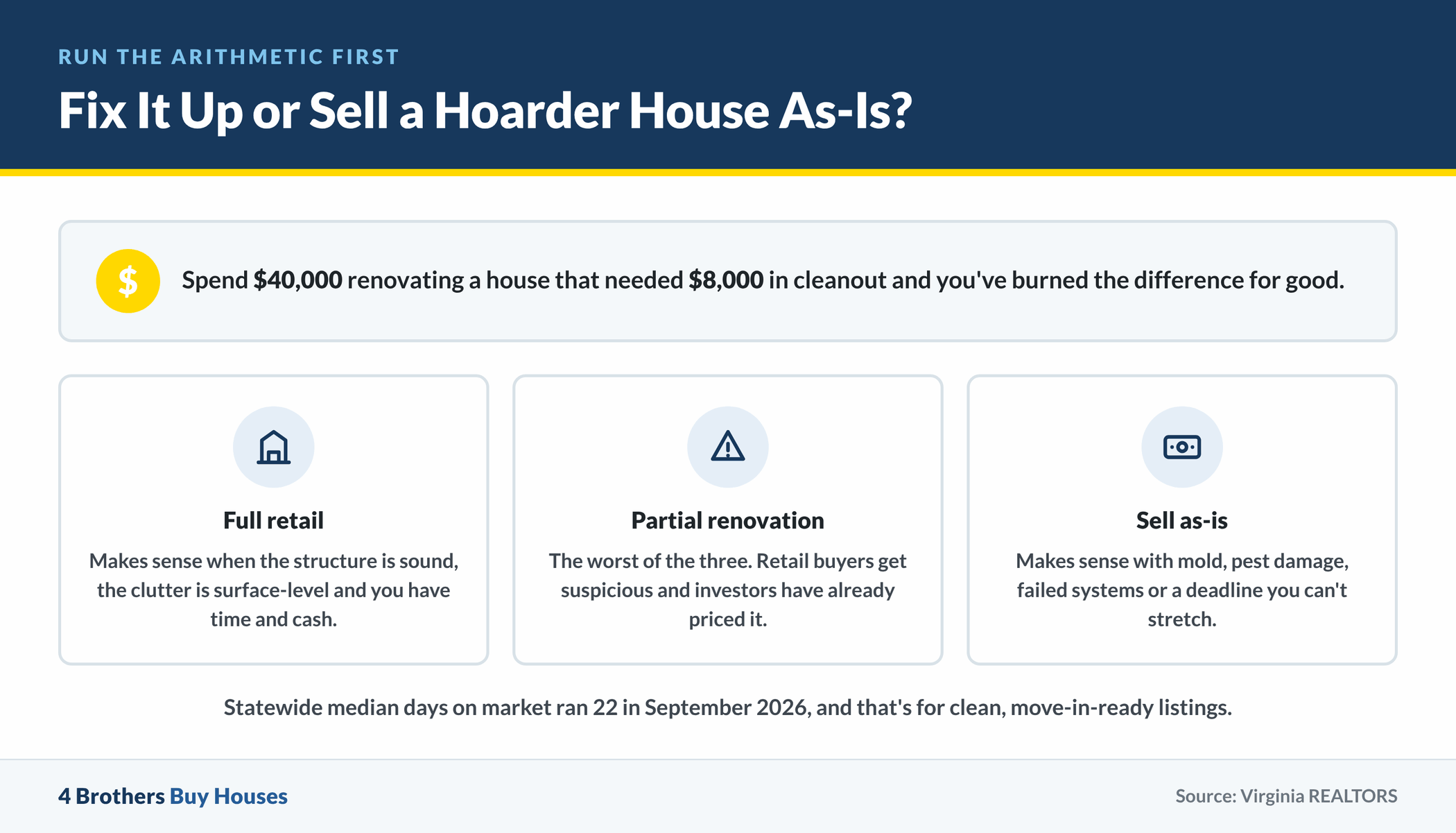
Spend forty thousand dollars renovating a house that needed eight thousand in cleanout, and you’ve burned the difference for good.
Run the numbers before the emotions. Add cleanout, repairs, agent commission on the back end, and the months of mortgage, taxes and utilities you’ll carry. Compare that total to a cash offer today. If it’s close, you’d be doing the work for free.
My take after a lot of these: partial renovation is the worst choice. A half-fixed hoarder house looks suspicious to retail buyers and pre-priced to investors, so you lose both.
A full retail sale makes sense when the structure is sound and you have time and cash. Any hoarder property with a dry basement and a solid roof is a different conversation than one with a soft floor. Median days on market ran 22 in September 2026, but that figure describes clean, move-in-ready listings. Add weeks for prep, then weeks for closing.
Selling a hoarder house as-is makes sense with mold, pests, failed systems or a tight deadline. Local buyers like 4 Brothers Buy Houses buy in any condition, which takes the cleanout off your plate.
What’s your actual deadline? That answer usually decides this faster than any spreadsheet does.
What Happens When You Inherit a Hoarder House in Virginia?
Inheritance adds a court calendar. Here, you qualify as personal representative before the circuit court clerk, then answer to a local Commissioner of Accounts.
Two early deadlines matter. You give written notice of probate to heirs within 30 days of qualifying, and you file an inventory within four months, as the Virginia State Bar outlines in its probate overview. That inventory uses date-of-death values, so somebody has to value a house full of belongings.
Clearing a parent’s hoarder house during probate is grief work dressed up as logistics. If the hoarder was your mom or dad, expect the sorting to bring up more than paperwork. One sibling wants everything kept, another wants a dumpster, and the house burns holding costs meanwhile. Photograph every room before anyone touches anything, agree in writing on who claims what, and set a hard date for the free-for-all to end.
Real estate generally passes to heirs at death, so your authority to sell depends on the will and the court. Confirm it with your probate attorney before you sign anything.
What Steps Should You Take to Sell a Hoarder House in Virginia?
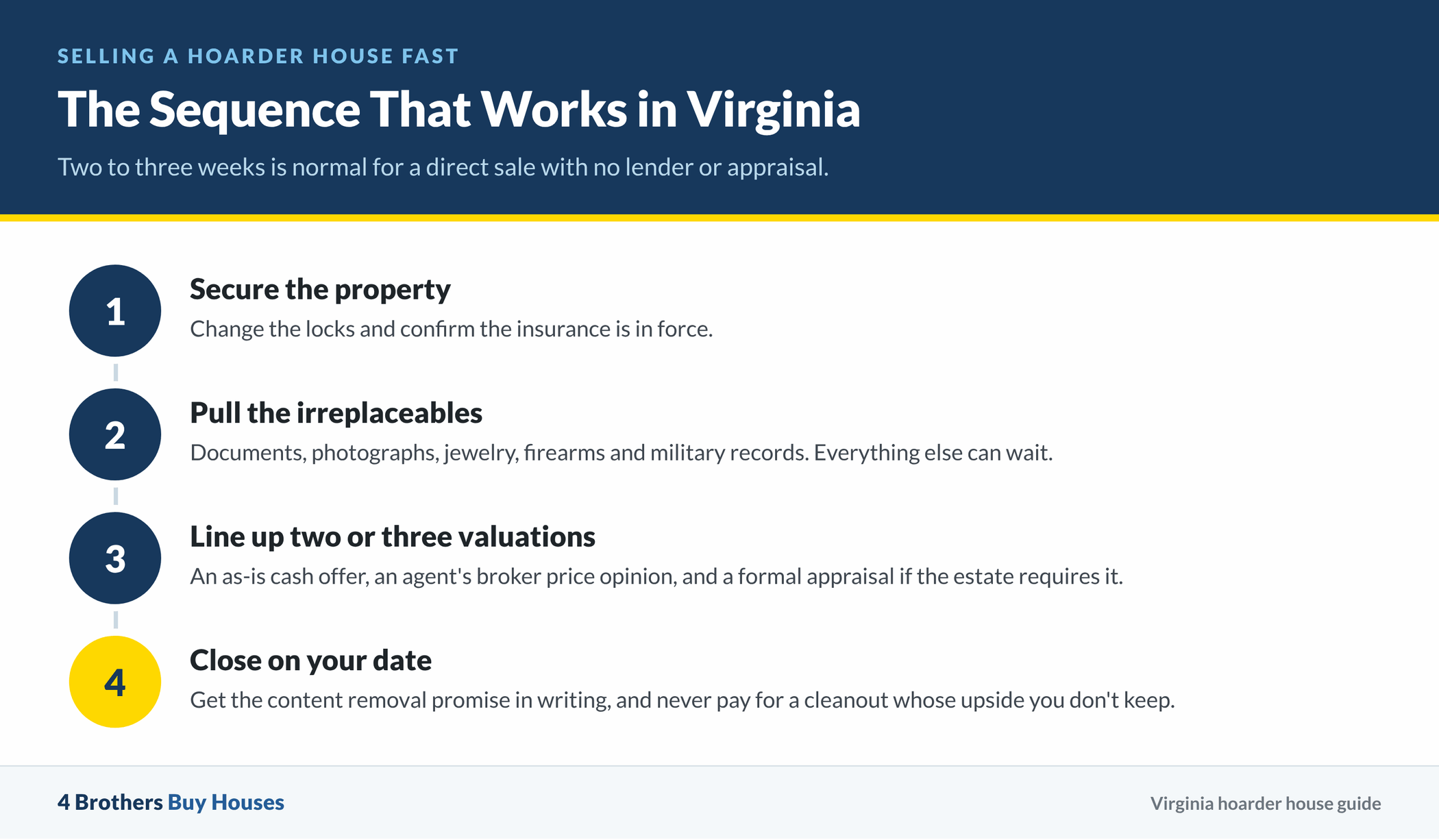
Start by changing the locks and confirming insurance. Pull anything irreplaceable, like documents, photos, jewelry, firearms and military records. Everything else can wait.
Then line up two or three valuations: an as-is cash offer, a broker price opinion from an agent who knows distressed property, and an appraisal if the estate needs one. Those numbers show the real spread between fixing and selling. A direct sale skips the lender, the appraisal contingency and the repair talks, so two to three weeks is normal. Pick your closing date, and expect a good buyer to work around your schedule rather than theirs.
Some cash buyers are lowballers. The honest ones show their math: after-repair value, cleanout, repairs, holding time and their margin. If a buyer won’t walk you through a hoarder house offer line by line, keep calling.
Get it in writing that the buyer handles the contents, and never pay for a hoarder cleanout you won’t benefit from. Walk away from anyone who wants money upfront, pushes a same-day signature or won’t show proof of funds. 4 Brothers Buy Houses doesn’t work that way.
Can you sell a hoarder house in Virginia? Yes, in any condition, at any stage of probate the court allows, with the contents still inside.
Who Can Help You Sell a Hoarder House in Virginia?
The right help depends on whether you list the house or go direct to an investor. Either way, you’ll probably need more than one person.
Going retail means an agent who’s sold distressed property before and an insured cleanout company. Ask for certificates. Biohazard work needs specific handling, and from the houses I’ve bought, the contractor who can document disposal is the one worth hiring. Going direct means checking the investor’s local track record, asking for recent closings nearby and confirming they buy with their own funds.
If the hoarder is still living in the house, mental health support belongs on this list. Clearing a house against someone’s will can damage the relationship for years. Social workers and therapists who specialize in hoarding disorder work across the state, and your local Area Agency on Aging can point you to them.
Estate attorneys, appraisers and the Commissioner of Accounts round out the probate side of the team.
Frequently Asked Questions
What’s the Process for Selling a House in Virginia?
You either list with an agent or sell directly, and both routes need the Real Estate Board’s disclosure statement. Listing brings prep, showings and a lender’s timeline. A direct sale skips most of that, and you sign at a title company.
Will Anyone Buy a House Full of Belongings?
Yes, and a hoarder house is routine for buyers who focus on distressed property. They price in removal and handle the hauling after closing. Take what matters and leave the rest.
When Is the Best Time to List a House in 2026?
Late April through June usually brings the most buyer traffic. Season barely matters for a hoarder home, though, since a packed house in May still competes against polished listings in May. Condition beats timing on this kind of sale.
How Fast Can a Probate Property Close in Virginia?
Once you’ve qualified and have authority to convey, a cash sale can close in a couple of weeks. Court approval, heir disagreements or title issues slow it down, so bring in your attorney early.
If you’re sitting with a hoarder property, we’re glad to look at the numbers with you and tell you straight if listing would serve you better. No pressure, no obligation and no judgment about the condition.
Where We Buy Hoarder Houses in Virginia
A packed hoarder house is routine work for us. We buy houses in Fairfax, Woodbridge and Fredericksburg with everything still inside. The 4 Brothers Buy Houses team covers the rest of our Virginia service area too.
Clean listings have more company than they used to. Northern Virginia had 3,477 active listings in September 2026, up 30.7 percent from a year earlier, so buyers have more homes to compare against yours.
Leave the Contents and Talk to Us
You don’t have to sort a single box in your hoarder house first. Contact us with the address and we’ll walk it as it sits. Read how our process works if you want to know what happens next, then use the form below.
Helpful Virginia Blog Articles
- Your Home’s Protection Against Hospital Liens In Virginia
- Squatter Challenges When Selling Your Virginia Home
- Essential Guide To Short Selling Your House In Virginia
- Selling A Hoarder House In Virginia’s Real Estate Market
- Sell My Flooded House In Virginia
- Selling An Estate Home In Virginia
- Selling a House with Delinquent Property Taxes in Virginia
- Can My Spouse Sell Our House Without My Consent in Virginia
- Can You Sell a House That Failed Inspection in Virginia?
- Worst Time to Sell a House in Virginia
- Is Selling a House with Mold Problems in Virginia Possible?
- How To Sell Your House Without A Realtor In Virginia