

A storm surge off the Elizabeth River doesn’t knock first. It pushes up through the crawl space, soaks the subfloor and drains back out by morning like nothing happened. Three weeks later, the smell starts.
I’ve bought houses from Hampton Roads up to the Richmond suburbs, and flood damage is the condition sellers misjudge in both directions. Some owners of a flooded house panic and take half what it’s worth. Others sink their savings into renovations no cash buyer asked for. There’s a middle path, and it starts with knowing what state law actually asks of you after a flood.
What Are the Most Common Mold and Water Problems in Virginia Homes?
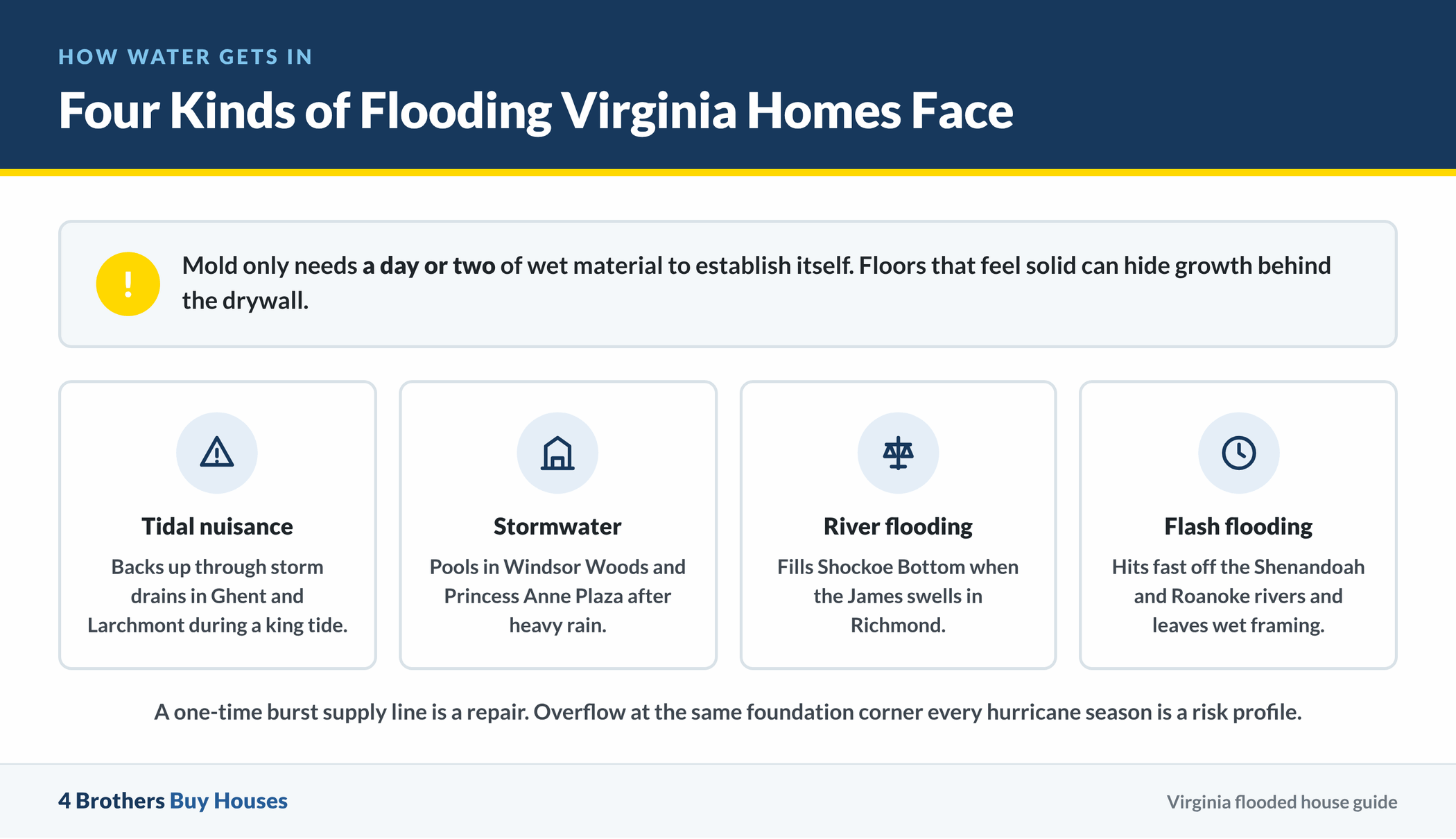
Flood water dries. Fans run in the hallway, a dehumidifier hums in the den for a week, and the floors feel solid again. Then somebody pries off a baseboard in month three and finds growth climbing the back of the drywall.
Tidewater geography does most of the damage around here. Crawl space houses in Norfolk, Portsmouth and older parts of Virginia Beach sit low to grade, and the vents let in humid air coming off the water. Mold needs only a day or two of wet material after a flood to take hold, the window that guidance from the EPA, CDC and FEMA all point toward.
Flood risk hits each region differently. Tidal flooding backs up through storm drains in Ghent and Larchmont on a clear day during a king tide. Windsor Woods and Princess Anne Plaza take stormwater that has nowhere to go after a heavy rain. Richmond’s flood comes when the James swells and Shockoe Bottom starts filling, while a flash flood off the Shenandoah or the Roanoke River drains fast and leaves soaked framing behind.
The cause shapes what a buyer worries about. A burst supply line in a second-floor bathroom is a repair. A flood at the same foundation corner every hurricane season is a risk profile, and risk moves value far more than drywall does.
Check the attic too, because hurricanes and other natural disasters don’t only push water up from below. After a hurricane peels shingles, water can track down rafters for months before anyone climbs up there. Ductwork running through a wet crawl space will carry spores into every bedroom.
Is It Legal to Sell a House with Mold or Flood Damage in Virginia?
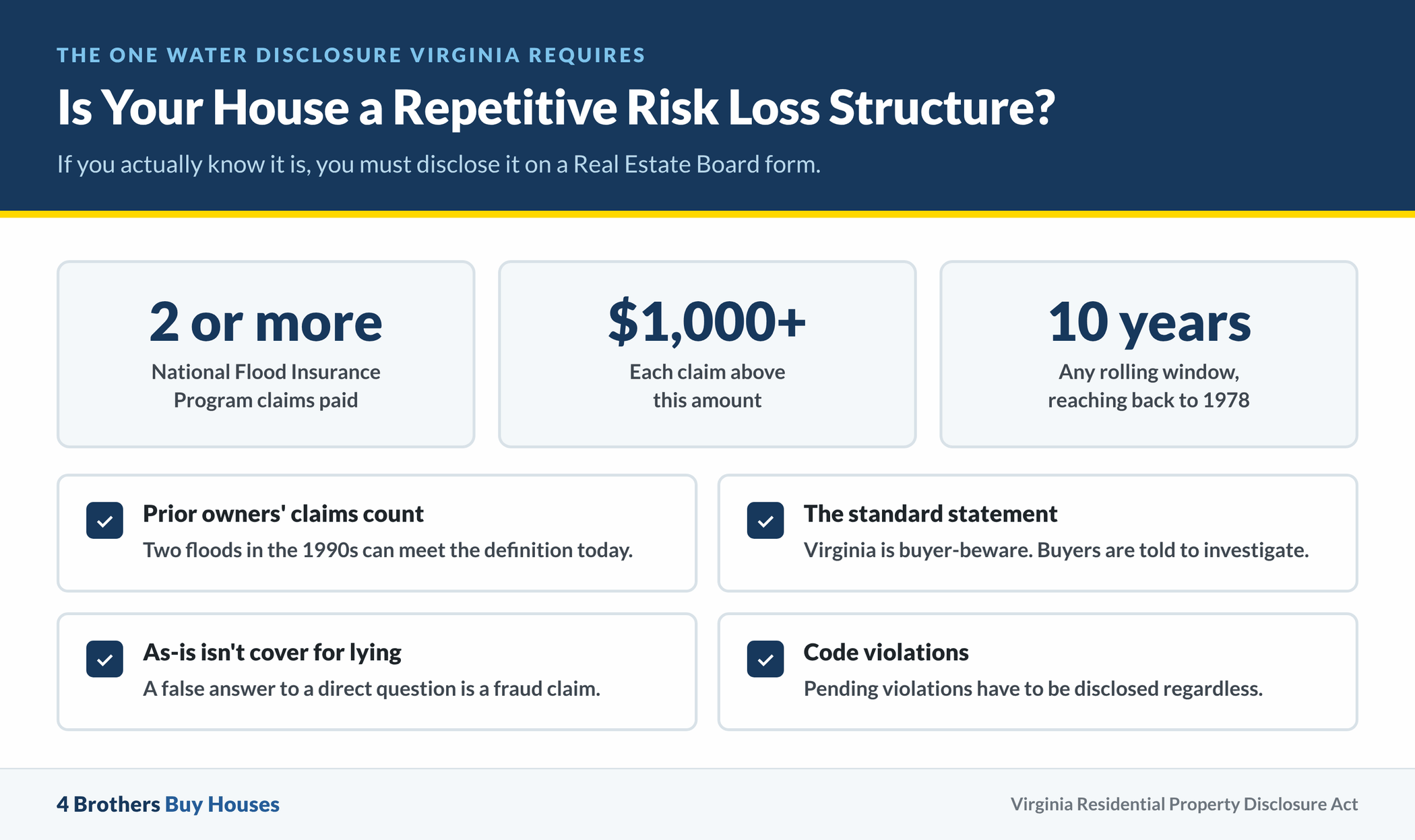
Yes. Virginia is a buyer-beware state, even for a flooded house. Under the Virginia Residential Property Disclosure Act, you give the buyer a standard statement from the Real Estate Board, and it tells them to investigate the property themselves.
You don’t write that form and can’t water it down. The version published by DPOR says the owner makes no representations about flood hazard areas and points buyers toward FEMA maps and the state’s flood risk system. Buyers can check whether a house sits in a flood zone on their own.
One real exception covers flood history. If you actually know the house is a repetitive risk loss structure, you have to disclose it on a Real Estate Board form. That means two or more NFIP claims above $1,000 paid within any rolling ten-year window, reaching back as far as 1978. Claims paid to an owner two owners before you still count, so a house that flooded twice in the 1990s can meet the definition today. If you aren’t sure, ask your insurance agent to pull the property’s claim history before you list.
As-is doesn’t give you cover to lie. A false answer to a direct question about the basement is a fraud claim waiting to happen. Pending building code violations have to be disclosed too.
My advice runs against what some investors say: disclose the flood history in writing anyway. Buyers who hear it from you stay at the table. Buyers who hear it from a neighbor walk.
How Does Flood Damage Affect the Home Sale Process in Virginia?
Will a lender even fund a flooded house? That question decides everything else.
A conventional or FHA appraiser who sees standing water, buckled flooring or visible growth will condition the appraisal on repairs. The lender won’t close until the work is done and reinspected, and a buyer with 5% down rarely has money for that. Those sales tend to die around week six, after you’ve paid two months of carrying costs.
Homes in Virginia Beach City carried a median of 38 days on market in late October 2026, according to Long and Foster’s market report. A flood-damaged listing doesn’t get that timeline. It gets a showing cycle, a failed inspection, a price cut and another failed inspection.
A few years back, two adult children called about their mother’s ranch in Great Bridge in Chesapeake. She had just moved into assisted living, the sump pump had failed in a wet spring, and the finished basement sat damp for a long weekend before anyone noticed. They’d already lost one buyer over the inspection report and were paying a mortgage on a house nobody could live in.
That flood history follows the listing. Days on market and price drops stay visible to the next buyer’s agent, and repeat failures build a story that costs real money at the negotiating table.
Do You Have to Remediate Mold Before Selling a Virginia House?
A seller in Hampton spent nine weeks and her whole insurance check replacing a kitchen after a dishwasher line let go. Her eventual buyer still demanded a mold assessment, because the hallway still smelled.
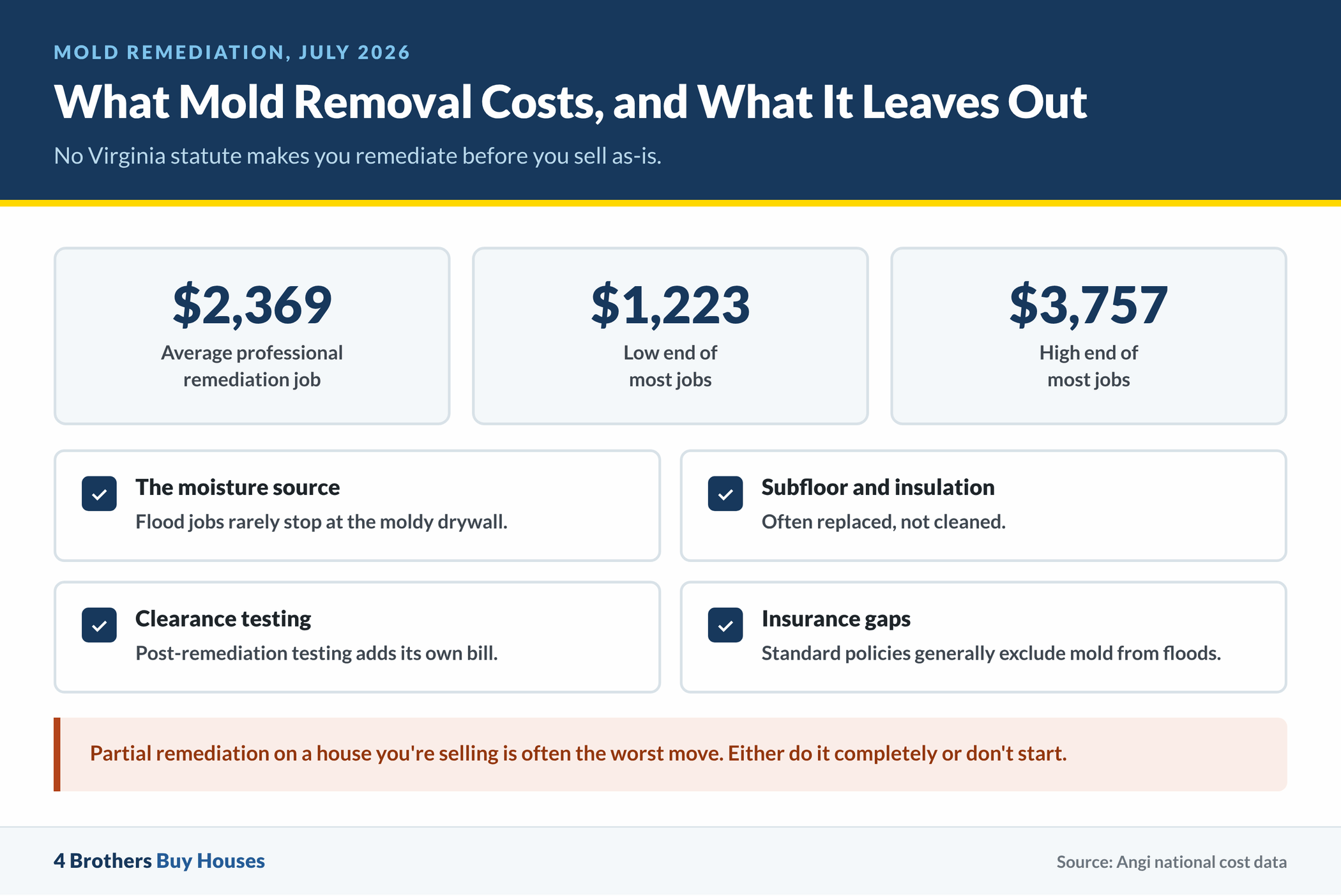
No state statute forces you to remediate before you sell. Code enforcement can step in if a house becomes unsafe, but ordinary mold in an as-is sale isn’t a legal barrier to closing.
The costs are where it gets interesting. Angi’s national data from July 2026 put professional mold remediation at an average of $2,369, with most jobs between $1,223 and $3,757. Those numbers look manageable. Flood remediation rarely stops at the drywall, though. You’re also paying for the moisture source, subfloor, insulation and clearance testing.
Insurance rarely softens it. Standard homeowners policies cover sudden events like a burst pipe and generally exclude mold from flooding or slow leaks. Without separate flood insurance through the NFIP or a private carrier, the insurer owes you nothing for rising flood water.
Here’s where I disagree with the usual advice. Partial remediation on a house you’re selling is often the worst move available. You drain your reserves, don’t satisfy the appraiser, and still have to disclose the work. Do it completely or don’t start.
Should You Repair the House or Sell It As-is?
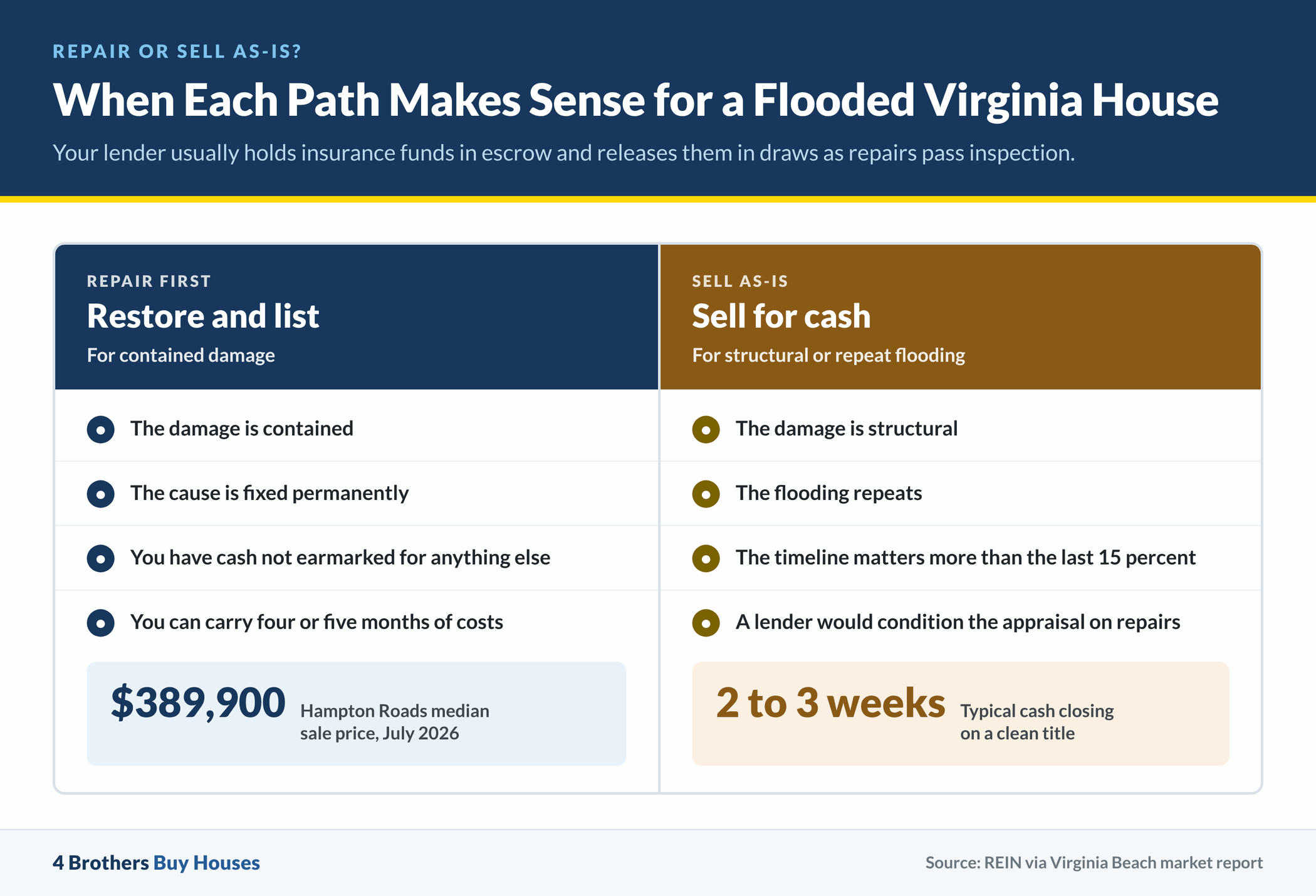
Your mortgage company has a claim on your flood insurance money, and most sellers learn that at the worst moment. When the check arrives with the lender’s name on it, the servicer usually holds the funds in escrow and releases them in draws as repairs pass inspection. You can’t simply pocket it and sell as-is without dealing with the loan.
Run the numbers before you fall for either option. Hampton Roads posted a regional median sale price of $389,900 in July 2026, as summarized in this Virginia Beach market report. Say a flooded house like yours would land near that once it’s back in good shape. Full restoration, four or five months of carrying costs and agent commissions at the end eat a wide slice of it.
Nobody prices in the schedule risk of remodeling a flood-damaged house. Permits in older localities take time. Framing that looked fine comes out once the drywall is off, and your contractor vanishes for three weeks when the next storm brings twenty emergency calls.
Repairs make sense when the damage is contained, the cause is fixed for good and you have spare cash. Selling as-is makes sense when the damage is structural, the flooding repeats, or the timeline matters more than the last fifteen percent of value. There’s no moral victory in restoring a house you can’t afford to restore.
Who Buys Mold-affected and Flooded Homes in Virginia?
Somebody is going to buy a flooded house as it stands. The only real questions are what they pay and how fast they close.
Local investors like us buy to renovate, then resell or rent. Small contractors buy one or two a year and do the labor themselves. Landlords with crews on payroll pick up a flooded house because they can absorb the work. Each values the same house a little differently, which is why you should get more than one offer.
Speed is the honest advantage. With no lender, there’s no appraisal and no repair escrow, so two to three weeks is routine on a clean title. Title work and the payoff letter set the pace, and probate, liens or a missing heir stretch it out.
A fair cash offer sits below retail value, because the buyer carries the risk that the subfloor is worse than it looks. Anyone telling you otherwise is selling something. Ask any buyer three things: do you have proof of funds, do you close in your own name, and what happens if your inspection finds more damage? 4 Brothers Buy Houses buys flooded houses as-is across the state, mold and standing water included, and we’ll answer all three directly.
What Happens If Your Virginia House Gets Condemned?
Every locality in the state runs condemnation through the Virginia Uniform Statewide Building Code. When the code official finds a structure unsafe or unfit to live in, the owner gets a written notice listing the fixes and the time allowed. Code officials in Hampton Roads and the Richmond region handle flooded houses constantly, and most will tell you plainly whether yours needs repair or removal.
If the danger is immediate, the official can order people out and post a placard at each entrance declaring the building unsafe and its use prohibited by the building official. After that, entry is limited to inspections, repairs or demolition. The code also lets the official order demolition when the hazard calls for it, usually at the owner’s cost.
A condemned house can still be sold. The violation moves with the property, and an investor who understands the process can take it on. What you lose is leverage and time, since the deadline keeps running while you shop for a buyer. Call your building department before it passes.
Weighing Your Options Before You Sign Anything
Waiting after a flood is the most expensive option, and it’s the one most owners pick by default. Interest accrues, taxes come due, and mold spreads through framing that was fine in March. Every month a flooded house sits empty, the gap between what you could have gotten and what you’ll get widens a little.
An heir in Phoebus in Hampton called me after carrying two mortgages for nearly a year, her own and her late father’s. The back half of his house had taken flood water, and four crab pots and a flat-bottom boat still sat in the garage. We closed in under a month, and she stopped bleeding money that week.
What would six more months of doing nothing cost you? Write it down: mortgage, insurance, a dehumidifier’s electric bill, lawn service and the repairs that grow while you think. Then compare three paths. You can list with an agent, take a cash offer today, or fix only the moisture source and sell to an investor. In my experience, the cash offer doesn’t always win.
Talk to a real estate attorney if there’s an estate, a divorce or a lien involved. Ask a settlement company about your payoff while you’re at it. Then decide with real numbers in front of you instead of a guess.
Frequently Asked Questions
What’s the Best Way to Sell a Flood-Damaged House in Virginia?
It depends on how much water got in and how fast you need out. Minor damage with a documented repair and a clean moisture reading usually sells fine on the open market. Subfloor replacement, structural drying or a recorded violation tends to go better with a cash buyer.
Do I Have to Tell Buyers About Past Flooding?
Not in every case. Virginia’s standard form makes no flood promises, but you must disclose a repetitive risk loss structure you know about, and you can’t lie when asked. The Virginia Flood Risk Information System makes flood risk and flood zone status easy for anyone to look up anyway.
Will My Insurance Payout Follow Me to the New Owner?
No, the flood claim stays with you, not the house. If you have a mortgage, though, your lender usually controls those funds until repairs pass inspection. Talk to your servicer before you plan around that check.
How Long Do I Have to Respond to a Condemnation Notice?
The deadline is printed on the notice and varies by locality and severity. Some give thirty days, and immediate hazards get less. Call the building official the week it arrives.
Can I Sell a House with Mold?
Yes. Mold is a disclosure item, not a transfer barrier. Conventional and FHA buyers usually balk, so these homes tend to go to cash buyers.
What If I Still Owe More Than the House Is Worth?
Get a payoff and a realistic value before assuming the worst. Flooded houses in parts of Norfolk, Portsmouth and Chesterfield have appreciated enough that the gap is often smaller than people expect. If there’s a real shortfall, ask your lender’s loss mitigation department about a short sale.
If you’re sitting on a flooded house in Hampton Roads or around Richmond, reach out for a straight as-is number. No obligation and no pressure.
Flooded Houses We Buy in Virginia
We buy flood and water-damaged homes well beyond Hampton Roads. That includes houses in Woodbridge, Manassas and Alexandria, standing water and all. The 4 Brothers Buy Houses team buys across our Virginia service area.
Dry houses aren’t hard to find for buyers right now. Northern Virginia had 3,477 active listings in September 2026, up 30.7 percent from a year earlier, so buyers have more homes to compare against yours.
Find Out What Your Flooded House Is Worth
If you’re weighing flood repairs against a sale, contact us for an as-is number you can compare. You can also see how our process works when the house has mold or a condemnation notice. The short form below gets it started.
Helpful Virginia Blog Articles
- Your Home’s Protection Against Hospital Liens In Virginia
- Squatter Challenges When Selling Your Virginia Home
- Essential Guide To Short Selling Your House In Virginia
- Selling A Hoarder House In Virginia’s Real Estate Market
- Sell My Flooded House In Virginia
- Selling An Estate Home In Virginia
- Selling a House with Delinquent Property Taxes in Virginia
- Can My Spouse Sell Our House Without My Consent in Virginia
- Can You Sell a House That Failed Inspection in Virginia?
- Worst Time to Sell a House in Virginia
- Is Selling a House with Mold Problems in Virginia Possible?
- How To Sell Your House Without A Realtor In Virginia